Master the critical clinical management of Pulmonary Embolism (PE) with our Pulmonary Embolism course. You will learn to utilize evidence-based risk stratification tools like the Revised Geneva Score and Modified Wells' Criteria, manage acute hemodynamic instability, and implement precise anticoagulation and thrombolysis protocols to improve patient survival in life-threatening emergencies.
By the end of this course, you will be able to:
pu
Emergency Room Physicians and ICU Specialists: Who manage the critical, "first-hour" interventions for hemodynamic instability.
Clinical Pharmacists: Responsible for managing anticoagulation therapy, adjusting heparin infusions via syringe pump protocols, and monitoring for drug-induced bleeding complications.
Critical Care Nurses: Monitoring patients for signs of respiratory deterioration, hemodynamic collapse, and managing complex infusion equipment.
Medical Students and Residents: Seeking to master the clinical pathways for VTE diagnosis and management in acute care settings.
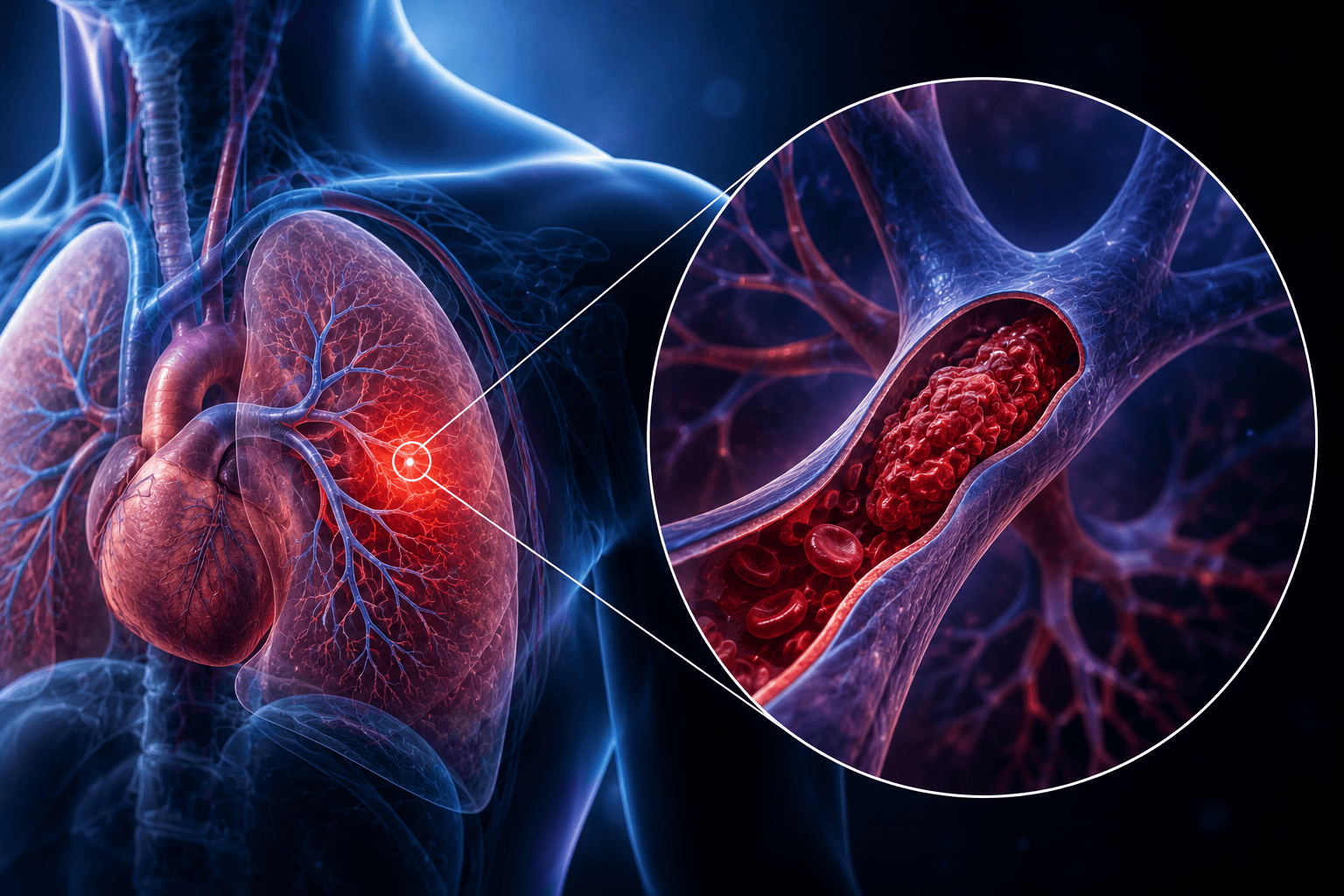
In this comprehensive course, you will explore the pathophysiology, diagnosis, and management of Pulmonary Embolism (PE), a life-threatening medical emergency where a blood clot, typically originating from a deep vein, dislodges and obstructs the pulmonary vasculature. The curriculum moves systematically from epidemiology—recognizing the silent prevalence of PE and its status as a leading cause of death—to the complex mechanical and physiological shifts that lead to right ventricular (RV) afterload, RV failure, and obstructive shock.
Throughout this learning journey, you will master the clinical and radiological diagnostic workflow. You will learn to apply clinical probability models, including the Modified Wells' Criteria and the Revised Geneva Score, to assess patient risk accurately. The course covers essential diagnostic tools, from D-dimer testing to CT Pulmonary Angiography (CTPA), and emphasizes the prognostic value of the Simplified Pulmonary Embolism Severity Index (SPESI) and echocardiographic indicators of RV dysfunction.
The management module provides detailed, evidence-based protocols for hemodynamic support—including oxygen therapy, mechanical ventilation, and vasopressors—as well as comprehensive strategies for anticoagulation and fibrinolysis, while remaining vigilant regarding contraindications. Finally, you will learn to manage long-term sequelae such as Chronic Thromboembolic Pulmonary Hypertension (CTEPH).
Pulmonary embolism is a high-stakes emergency where rapid clinical decision-making directly dictates patient mortality; two out of three patients who succumb to PE die within two hours of their first presentation.
This course is essential because it will help you:

Dr. Fady Nady Geriages is a dynamic clinical pharmacist and educator with strong expertise in clinical pharmacy practice, antimicrobial stewardship, and healthcare training. With a PharmD from Ain Shams University and a solid academic background, Dr. Fady has built a career centered on optimizing patient outcomes through evidence-based pharmaceutical care and multidisciplinary collaboration.
He currently serves as a Clinical Pharmacy Specialist within the Cleopatra Hospitals Group at Nile Badrawy Hospital, where he actively contributes to clinical rounds, develops comprehensive pharmaceutical care plans, and plays a key role in training both undergraduate and postgraduate pharmacy students. Prior to this, he worked at Dar Al-Fouad Hospital in collaboration with Cleveland Clinic, where he was an integral member of the Antimicrobial Stewardship Program (ASP), managing restricted antibiotics and supporting institutional efforts to combat antimicrobial resistance.
Dr. Fady has demonstrated a strong commitment to education and capacity building, delivering hundreds of training hours for pharmacy students and healthcare professionals, as well as providing ongoing nursing education to enhance medication safety and patient care quality. His contributions extend beyond clinical practice to include policy development, process improvement initiatives, and active participation in pharmacy and therapeutics committees.
Throughout his career, Dr. Fady has consistently driven innovation within healthcare systems—whether through improving medication administration protocols, leading continuous education initiatives, or supporting hospital-wide responses during critical periods such as the COVID-19 pandemic.
Passionate about advancing clinical pharmacy practice, Dr. Fady combines clinical expertise, leadership, and educational impact to empower healthcare professionals and elevate standards of care across modern healthcare institutions.
Can’t wait to reach them, brilliantly with Plan P!

Register now to access courses, certifications, and real-world training
© 2026 Plan P. All rights reserved.